The Government Loan Most Local Developers Never Use with Jordan Blanchard | EP #53
Real estate development, rural financing, and unlocking larger projects through USDA lending.
Most local developers don’t fail because the deal was bad.
They fail because nobody showed them how the money actually works.
Most developers know conventional loans. Very few understand USDA lending.
In this episode, Jordan Blanchard breaks down how local developers are using USDA loans, capital stacking, and alternative financing structures to get projects built in communities most lenders overlook.
This episode is for developers, investors, and community leaders trying to figure out how to fund projects that don’t fit inside a traditional bank box.



Get the tools behind the episode
Access the Developer Vault with templates and real resources
Episode Summary
A lot of local developers assume the deal dies because the project wasn’t good enough.
But according to Jordan Blanchard, that’s usually not the real issue.
The real issue is that most people were never taught how the capital stack actually works.
In this episode, Jordan breaks down the world of USDA lending and why it has quietly become one of the most powerful tools available for rural development, adaptive reuse, hospitality, infrastructure, and community-based projects.
And most people have never even heard of it.
Jordan has spent more than 35 years in commercial lending, starting in SBA lending before eventually building one of the top USDA lending platforms in the country through Excalibur Real Capital. Along the way, he realized something important.
Traditional financing often avoids the exact projects local developers are trying to build.
Rural markets. Construction deals. Larger loan amounts. Startups. Projection-based projects.
Those are the deals most banks hesitate to touch. But USDA lending was designed specifically for many of those situations.
Jordan explains how USDA loans differ from SBA loans, where the opportunities exist, and why leverage matters more than simply chasing the cheapest interest rate.
He also breaks down concepts most local developers rarely hear about early in their careers, including commercial PACE financing, capital stacking, tax credits, and how multiple funding sources can work together to unlock projects that otherwise never get off the ground.
One of the biggest misconceptions he addresses is the idea that government-backed loans are “easy money.”
They’re not.
Developers still need strong financials, clear projections, equity, and experienced teams. The difference is that USDA programs allow lenders to take on projects conventional financing may reject because of location, construction risk, or scale.
The conversation also expands beyond for-profit development.
Jordan explains how USDA financing can support rural hospitals, fire districts, water systems, nonprofits, infrastructure projects, and community facilities that become catalysts for long-term economic growth.
For local developers, this is one of the most important lessons in the episode.
You do not need to know every financing structure yourself.
But you do need to know the right strategic partners.
Because often the difference between a stalled project and a funded one is simply having someone in your corner who understands the programs, relationships, and creative structures available.
This episode is a reminder that funding is not just about debt.
It’s about understanding how to structure opportunity.
And for many local developers, there are tools available they’ve never even been told exist.
What You'll Learn
- The difference between USDA and SBA loans
- What types of projects qualify for USDA financing
- How capital stacking works in development
- What commercial PACE financing actually is
- Why rural development projects struggle with conventional lenders
- How strategic financing partnerships unlock larger deals
Bold Truth
A lot of deals don’t die because the project was bad. They die because nobody understood the financing options available.
Timestamps
0:00 — Intro
https://youtu.be/ufb-Og2qeio?t=0
1:20 — Meet Jordan Blanchard
https://youtu.be/ufb-Og2qeio?t=80
2:25 — Jordan’s lending background
https://youtu.be/ufb-Og2qeio?t=145
3:41 — USDA vs SBA loans
https://youtu.be/ufb-Og2qeio?t=221
5:12 — What commercial PACE financing is
https://youtu.be/ufb-Og2qeio?t=312
7:42 — Pros and cons of USDA loans
https://youtu.be/ufb-Og2qeio?t=462
11:12 — Loan structure and rates
https://youtu.be/ufb-Og2qeio?t=672
13:38 — Biggest misconceptions about government loans
https://youtu.be/ufb-Og2qeio?t=818
17:24 — What qualifies as “rural”
https://youtu.be/ufb-Og2qeio?t=1044
21:29 — Preparing for a USDA-funded project
https://youtu.be/ufb-Og2qeio?t=1289
23:20 — Construction vs acquisition financing
https://youtu.be/ufb-Og2qeio?t=1400
25:08 — USDA loan assumptions explained
https://youtu.be/ufb-Og2qeio?t=1508
26:29 — How capital stacking works
https://youtu.be/ufb-Og2qeio?t=1589
29:18 — Carbon credits and energy projects
https://youtu.be/ufb-Og2qeio?t=1758
30:33 — Why most people never hear about USDA loans
https://youtu.be/ufb-Og2qeio?t=1833
32:11 — Why strategic partners matter
https://youtu.be/ufb-Og2qeio?t=1931
33:33 — Nonprofit and community development financing
https://youtu.be/ufb-Og2qeio?t=2013
36:35 — Jordan’s favorite project story
https://youtu.be/ufb-Og2qeio?t=2195
39:03 — Key takeaways for local developers
https://youtu.be/ufb-Og2qeio?t=2343
40:06 — How to connect with Jordan
https://youtu.be/ufb-Og2qeio?t=2406
Meet the Voices Behind the Mic
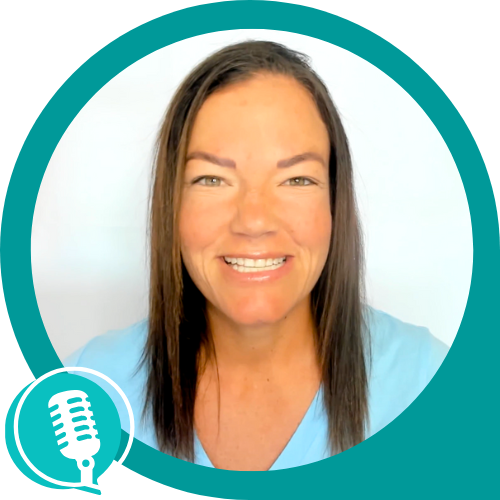
Kristi Kandel
Developer | Mentor | Co-Host of the LRED Podcast
Kristi is a real estate developer with nearly 20 years of experience and over $450M in projects across the U.S. Today, she focuses on helping locals step into development and build in their own communities.
She’s the founder of I&D Consulting, Local Real Estate Developers (LRED), and co-founder of Elevate, a community-driven sports and wellness concept.
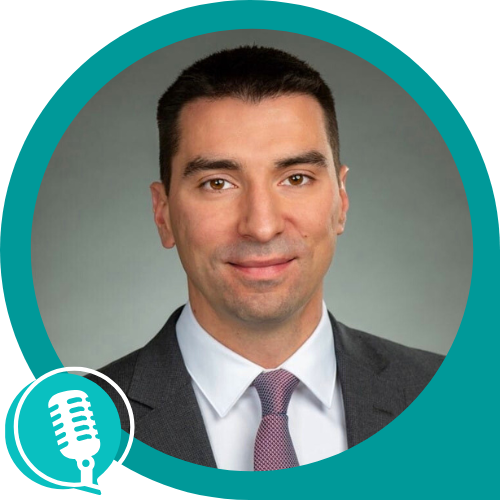
Raphael Collazo
Commercial broker | Author | Co-Host of the LRED Podcast
Raphael specializes in retail and industrial properties, bringing a problem-solving mindset from his background in engineering and software. As a commercial real estate advisor and developer based in Louisville, Kentucky, he works directly with investors, tenants, and cities, bringing a real-world view of how deals come together.
🔗 Related Episodes
How to Become a Local Developer: Katie Neason on Infill and Taking the First Small Bet | EP#29
A great companion episode on local infill, city relationships, and taking practical first steps in development.
How to Start Real Estate Development: Steph Weber Bought the Land First and Built the Plan Later | EP #41
A real look at taking your first development deal from idea to execution without having everything figured out.
Small-Scale Development: How She Left Her Corporate Career and Built a Tiny Home Village | EP #39
Another path from traditional career to building a community-driven development project.
About the Guest
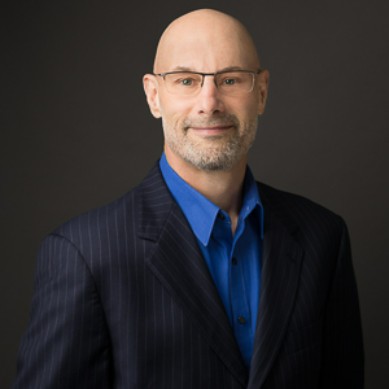
Jordan Blanchard is a commercial lender and co-founder of Excalibur Real Capital, one of the top USDA lending platforms in the country. With more than 35 years of experience in SBA and USDA lending, he specializes in rural development financing, capital stacking, and large-scale community projects.
Connect with Jordan
🌐 Website https://xrcusda.com/
💼 LinkedIn https://www.linkedin.com/company/x-caliber-capital/
Full Transcript
Raphael Collazo (00:41)
Welcome to the Local Real Estate Developer Podcast. I'm your co-host, Raphael Collazo, tuning in here from Louisville, Kentucky. I am a commercial broker, investor, and local developer. And we're excited again today for a great episode of the podcast. And I'm here with my co-host, developer extraordinaire, Kristi Kandel. It's always great to see you. How you doing?
Kristi Kandel (00:59)
Yeah,
great to see you. I'm doing well. Just enjoying the weather in Southwest Florida. So, yeah, I'm a developer investor and I also teach people how to become developers in their own community. And part of the fun that I have every week is finding different people who are connected to the development world and hearing their stories and then going, hey, we need to share your story on the local developer pod.
So today's guest is one of what we would call our strategic partners that they help our developers get deals done. And he has a wealth of experience. And as many of you know, when you're in more rural communities and settings, it's harder to get funding, but there actually are a couple of products out there that can help you get the debt you need to get your deals done. So that is who we have today. We have Jordan Blanchard, who is a USDA lender.
along with many other things and expertise. So welcome to the show.
Jordan Blanchard (01:50)
Thank you, Kristi and Raphael. I'm glad to be here and I'm excited because I think you all, you're at the right intersection of development for both for-profit and nonprofit. I've listened to some of your podcasts, so I'm excited to talk about the tools that can help with both of those.
Raphael Collazo (02:03)
Absolutely, no, I'm excited to kind of dive into some of these topics because it's an area that frankly I don't have as much experience in specifically the USDA I've been able to work with many clients in the past regarding the SBA process But I'm kind of interested to dive into your experience on the funding side So if you don't mind kind of share a little bit about your backstory, I think that'd be great
Jordan Blanchard (02:25)
Certainly, so I'm a 35 year commercial lending veteran. most of that was spent offering SBA loans, but the 7A and the 504 products. So I'm happy to talk about both those products and compare and contrast to USDA. About 10 years ago, a regional bank asked if I would start and lead a USDA lending group. I didn't really know much about it.
And I said, sure. And it really opened my eyes, especially because SBA is rather restrictive and USDA is much broader in what you could use it for. So three or four years later, we were the number one USDA lender in the country. COVID came, I'm sitting around at home on my couch saying, geez, I wonder if I could do this on my own. So I partnered with my business partner, Chris Callahan. We started Excalibur World Lending.
or excuse me, Excalibur Royal Capital, and we are a licensed non-bank USDA-backed lender. Fortunately, we grew to become the number one USDA lender again in 2023, and we've just been kind of cruising from there. anything related to both SBA and USDA, I'm happy to discuss today.
Raphael Collazo (03:33)
Definitely. No, mean, kind of curious if you could just elaborate on maybe some of those nuances for those who are listening to the podcast.
Jordan Blanchard (03:41)
Sure, there's a lot of different things that we can talk about, but first and foremost, I'd like to talk about just the dollar amount. So the SBA 7A program, you could use for real estate development, which is what you focus on, but you could use it for business acquisition, business, starting a business, working capital, those kind of things. That program caps out at five million. You then have the SBA 504 program, which is a public-private partnership where...
A lender does a first, USDA does a second, and you can get to 10 to $15 million loan amounts there. USDA is much broader for a couple of reasons. One is on the for-profit program, the maximum loan amount's 25 million. So you're already starting at a much higher dollar amount. For the nonprofits and the munis, we could go up to $100 million.
So first and foremost is just the dollar amount of what you can get to. And then secondarily, USDA is much more palatable to partner with other programs or what we call capital stacking. So for example, commercial PACE, we pair commercial PACE with a USDA loan. So instead of doing 25 million in finance, we might do 40 million by bringing in PACE. We can also use new market tax credits, which is
really applicable for nonprofits. So maybe it's 10 or 15 million of new markets combined with 30 or 40 million of USDA under the nonprofit program. And we're just able to get to much larger transaction sizes than could be considered with SBA.
Kristi Kandel (05:12)
You mentioned pace and I think someone else had brought it up previously, but maybe can you also expand on what that is just for the listeners now?
Jordan Blanchard (05:21)
Sure, that's a great idea. So commercial PACE stands for Property Assessed Clean Energy. It was a product that was developed by the city of Berkeley back in the 70s to allow people to finance solar. Because if you had a first mortgage from a bank and solar back then was extremely expensive, how were you going to finance it? They came up with this product, PACE, which is really a voluntary
parcel by parcel self-tax assessment. So as it relates to the commercial pace part of it, it's really only available for new builds because you have to build energy efficient building materials. So you might be an energy efficient roof or the windows or the lighting or the HVAC. But in general, 20 % of a project would qualify for pace. But the fact that it's a tax assessment means that it's
both senior to the mortgage, but it's also non-recourse because it runs with the property. So I'll give you an example. Let's say that somebody wanted to buy property and build a building. was going to be $10 million. And we said, you know, for the senior loan, we can get to $6 million. And the developer says, well, geez, I only have 20 % down. We could then say, OK, in those states that allow it,
we could record a tax assessment of $2 million. Now you have that 2 million plus our 6 million gets you to 8 million or 80 % leverage. The PACE is repaid via property taxes, just like any other property tax that you pay. So it's an incredibly powerful development tool with some restrictions. The state has to opt into PACE. So Florida has opted in
to pace and you can get commercial pace in Florida. Frankly, I don't know in Kentucky, but that's number one. Number two, it's going to be for new build only.
There few other restrictions, but it can be an extremely valuable tool. I will say that it's not available in every situation because the senior lender has to consent. We will consent to having that pace ahead of us. Many lenders will not. So it doesn't work in all cases, but what it does, it's very valuable. One last thing. You have to pay property taxes. if you don't pay property taxes because you're a Muni, for example, a municipal borrower,
or you're a nonprofit that doesn't pay property taxes. If there's no property taxes, there's no PACE. That'd be the other potential restriction.
Raphael Collazo (07:42)
interesting so questioned about the nuances of of the you usda verses sb a a kind of alluded to one of the pieces which was the total amount that's available for funding maybe talk a little bit about the pros and cons of the programs are and then maybe share examples where one would be preferable to the other that think that'd be helpful
Jordan Blanchard (07:56)
Yeah.
Sure, so let me start with where a USDA loan can be beneficial. So number one, rural locations, not every lender wants to lend in rural America. Construction, many lenders avoid construction. Larger projects. So you put those three things together, that's already a challenge. And by the way, startups, expansions, and projected based transactions.
So I mean, you just kicked out 90 % of the conventional lenders at the very least.
Kristi Kandel (08:32)
And can
we even just time out and say, why do conventionals not like those first things? Why do they not like construction? Why do they not like those?
Jordan Blanchard (08:39)
Each one has its own element of risk. the challenge with lending on a project in rural America is the go dark value or liquidation value may be much less because there's just a much smaller pool of eligible buyers. That's the first thing. Construction has its own risk metric. You have cost overruns, you have contractor failures, you have the business maybe encountering some sort of financial difficulty during construction.
versus just, you know, I'm financing a purchase or refinance. So that's another reason. And then the larger loan amounts, what ends up happening is the local and regional banks are okay with those risk metrics, especially if they're in those markets. But when you start talking about $50 million projects, you exceed the balance sheet capacity of a regional bank. And that's where USDA could then be an optimal solution. So.
Those are the main ones. The ability to lend on projected income is a big one, plus the other three that I mentioned. What are some of the negatives? Well, I start off most of my sales pitches, my sales calls with USDA loans cost too much and they take too long. You know, are you still interested? But I just want to get it out on the table. It's true. It's going to take longer than a conventional loan, which is generally 90 days.
an SBA loan can be 90 to 120 days, a USDA loan is generally going to be at least six months. Why does it take that long? The USDA expects the lender to do everything it would do to be able to close a loan. So if you're just looking at normal conventional commercial lending, it's about 90 days. Once all that is done, then the USDA says, okay, send it to us and now we'll work on it. So you have this extra lag.
every other government guaranteed back program there are fees. So SBA has fees, USDA has fees. What is different is there are also lender origination fees with USDA that are not present in SBA 7A at least. So you know it's a little bit more expensive than an SBA loan. But what do you get for that? You get higher leverage than you could get for a conventional loan.
you get more access to those other items, and we have the ability to finance all of the soft costs. you know, if the cost going in is 3.5%, plus you have an appraisal and title and all that other stuff, we can add all that into the project and we can finance up to our maximum. Maximum is generally 80 to sometimes 85 % leverage. That's the big draw right there.
Raphael Collazo (11:12)
Yeah, especially for new construction. I feel like that would be very attractive. And as far as rates are concerned, it's probably somewhat comparable to what you'd find in the SBA market. Also, how is the loan structured? Is it a five-year fixed floating rate thereafter? Or how is it typically structured?
Jordan Blanchard (11:30)
Yeah, good question. So I think one of the advantages of the USDA loan is that the SBA will excuse me, USDA will not allow us to offer a balloon payment. So when we structure a loan, it is usually construction through perm and it might be two years interest only to build a facility followed by 25 years fully amortizing that eliminates refinance risk. And when the construction loan is folded into the term loan,
you don't have this wondering if the term loan is really going to be there at the end of construction. So I think that's advantageous. As far as the rates go, we're actually probably more competitive than at least the SBA 7A program. And that's because the vast majority of SBA 7A loans are priced to prime adjusting quarterly, prime plus one to prime plus two. You know, when prime is low or heading lower, it's great.
when prime is going up, it's terrible, especially when prime goes up quickly, because then you have the shock to the debt service that some businesses just can't sustain. We do have the ability to offer quarterly adjustable rates, but our company tends to focus more on five, seven or 10 year fixed rates, initial terms, and then resetting thereafter, because that gives a customer time to deal with rising interest rate environments far in advance.
Raphael Collazo (12:48)
Yeah, that's one of the big risks to any project is how does it how is the, you know, interest rate, especially during the construction period, I mean, you're just kind of holding to what's going on. And it can be kind of challenging to manage it for whatever reason you find yourself on the wrong end of an interest rate hike. So especially with, you know, what comes along with that is, is also, you know, concerning. So
And you know, one of the questions we have regarding that, and this is something my clients have asked me in the past regarding specifically the SBA, as I mentioned before, I haven't had too much experience on the USDA side is related to the government backing piece. So what are some of the misconceptions that you see about that? Because sometimes I think there's there are some people out there that have this preconceived notion about kind of getting in bed with with the government as you would maybe not maybe not the best way to describe it, but there is a piece to that. So
Jordan Blanchard (13:38)
I think that's the biggest misconception. So when people think about an SBA loan or a USDA loan, they think they're borrowing directly from the SBA or the USDA. And for the for-profit borrowers, that's not the case. You are interacting with a lender who has been licensed to then apply to the government entity for a partial guarantee. So we, the lender, is the customer to the USDA or the SBA, not the borrower.
bar is the customer to the lender. So that's the biggest misconception. Another one might be, you know, you don't have to qualify or, you know, there's very little qualification. That's not true. Like, you know, we and the government want their money back. So it's you still have to have sufficient equity and expertise and, and, you know, your financial wherewithal and projections that all has to check out. think another one is
borrowers may say, you're getting a guarantee from the government, so what do you care about the credit? Well, we care a lot for two reasons. One is our own money is in the project. So the government is only giving us a partial guarantee. And two, if we're not good stewards of the government's money, they will come after us for recourse, not just the borrower. So we have to be very diligent.
We can be more aggressive in those areas that I talked about, but it's definitely not a program where it's, know, grant-like. It's not that. It's commercial credit like any other commercial.
Kristi Kandel (14:59)
So when you say a partial backing, is there like a general percentage? Is it based on how like you're rated within their system? Do you guys all get the same type percentage of backing?
Jordan Blanchard (15:09)
We do. So, I mean, there's nuances, but in general, the SBA 7A program allows for a 75 % guarantee. For the USDA, we qualify for an 80 % guarantee.
Kristi Kandel (15:21)
So you're taking that on and you still have that 20 to 25 % chunk. Why would you?
But without going into why I think you do it, why would you choose to specialize in this and have this type of loan versus just being a conventional lender and maybe less strings or reporting or everything?
Jordan Blanchard (15:38)
Great question. Yep.
Sure, sure. So let me start from the focal point of a community bank. We're not that, but I just want to start there. So a community bank has a legal lending limit and they also are subject to criticism from regulators by making loans that are too large relative to the legal lending limit. So they might have a legal lending limit that's $10 million, but they'll say their in-house limit might be five.
There's no way you can do a 20 or $25 million loan with either of those. So this is a way for a community bank to stretch its legal lending limit. In our case, as a non-bank lender, it's access to capital. A bank has a cost of funds that can range anywhere from 0.01 % that Wells Fargo pays us on our checking account to 2 to 3 % for the more regional banks.
As a non-bank lender, we don't have access to that. can't take in borrowed deposits, so our cost of funds is much higher. So what this does, what these guarantees do, is they allow us to pair our capital with capital that can be recycled because of the guarantee. So we'll make a guarantee, a guaranteed loan, and then we can sell the guarantee to a third party, or we could pledge it to a third party for liquidity.
And that allows us to offer bank-like rates that we wouldn't otherwise be able to
Raphael Collazo (17:00)
Makes sense. Yeah. So you're able to recite, not recite, for lack of a better word, you're essentially taking the notes, putting it in a position to where a third party would be interested, you were able to sell that note in some capacity to that lender, and then you can have you have capital available at that point to go out and continue to make loans for those those those situations. That's that's interesting. So you know,
Jordan Blanchard (17:18)
That's right.
Raphael Collazo (17:24)
Regarding our audience and as you're aware of this our focus area is in with local developers So people in their own community that are taking on small to mid-size projects some some have taken on very large projects Some of them are in larger metro areas while others are more in rural communities
You mentioned the rural aspect of the USDA. How would you classify rural? Is this something where there's a population threshold? I'm just kind of curious about that.
Jordan Blanchard (17:55)
Yeah, excellent question. And so there's two answers. The USDA has a map. So you you put your address in the map and it will tell you and the map is the source of truth. Doesn't matter what I say here after it's the map. In general, it's defined as a town or census area of 50,000 or less not contiguous with a more populated area. So you could be a suburb of Houston or Miami, but
and be 20,000, that's not gonna qualify. You have to be physically separated by a landmass, a river, an ocean channel, what have you. I will say though, you'd be shocked at some of the areas that qualify as rural. So I live in Tucson, Arizona. I can see downtown and U of A right up my window. And in my area, I'm considered rural.
So again, it's whatever the map says and vice versa. There'd be some areas where it's like, well, this is obviously rural, but if it doesn't conform to the map, it doesn't count.
Kristi Kandel (18:57)
Yeah, I would actually say just for example, the two of the projects I'm working on right now, it's interesting that, like especially in summer or winter, you would not believe this, but like South Lake Tahoe is considered rural and could qualify for USDA loan. The population itself is I think around 21,000. So that makes sense. But like when you see the people in activity in El Dorado counties right there and Douglas County across the state line, it just seems bigger. Whereas Bonita Springs,
I just looked it up and it has a population I want to say of like 56,000 and it says it does not qualify. But if you went through it, you'd be like, wow, this is a sleepy little community and there's not a ton of development around it. So you'd go, huh, I would think that would be rural and it's not. Now surrounding areas of the county are but not that one. it's yeah, the map is it. right.
Jordan Blanchard (19:49)
The one I'm always shocked about in Florida is Naples. So last time I looked, Naples is considered rural.
Kristi Kandel (19:57)
Yeah, that's an even more important. Yeah. Yeah. Okay.
Raphael Collazo (19:59)
Well,
that's good to know, though. So if those of you guys who are listening that are exploring financing options and you haven't considered looking at the USDA route as an option, maybe going to their website and typing in your address and confirming that you are, fact, in a rural area, that may also open up those doors for you.
Regarding the credit piece, because you mentioned that's obviously a very strong component of the analysis about whether or not you guys will issue funding for projects. What could people do ahead of approaching someone like yourself to get themselves ready to take on a loan with the US USDA loan as an example, to take on let's say a
a few a two million dollar project if it's a multi mixed use project adaptive reuse etc
Jordan Blanchard (21:29)
It depends upon the scenario, but I'll bifurcate it between purchase and ground up construction. So for ground up construction, obviously a detailed sources and uses. we are kind of the end of the, not development process, because you need the financing, but people have to bring a project that has identified sources and uses.
because we need to know what it's going to cost. We can't get started. It takes a construction cost breakdown for us to be able to close. requires a contract to close and a construction cost breakdown from a third party contractor to even apply. So that's the first thing. The second thing would be make sure the equity is in place. It doesn't do anybody any good to say I have this project and it's going to be subject to some amount of equity that
We've seen so many projects that fail because they weren't able to raise the equity. So those would be the important things. I will say for any project that is projection-based, a third-party feasibility study is going to be required. That is a USDA requirement. So that is like a business plan expert, I guess you'd say. And that's not a cheap report. I mean, it could be five to $10,000, which leads me back to the $2 million scenario.
It might make sense to get a USDA loan to buy a $2 million building that's cash flowing or if you're a small business and you want to buy a $2 million building and you show historical debt service. In other words, it's not projection based because you could avoid that feasibility study. But if you're going to do anything that's ground up construction, you probably want to look at USDA at starting at $5 million and going up from there and then $5 million and under. You're better off with SBA.
just because it's just an easier credit to get and it's within the maximum of five million from the SBA.
Raphael Collazo (23:20)
Yeah, so in that case, one other thing related that you kind of mentioned, is interesting. So with USDA, you can acquire existing. You don't necessarily have to acquire, or you don't necessarily have to do a ground up construction project, although it may be beneficial. Maybe that's a time or an instance where that would be beneficial to pursue SBA. Is that correct? Not SBA, USDA. Sorry.
Jordan Blanchard (23:39)
Yeah, so just Yeah for
USDA you could use it for a purchase first of all It's mainly for purchase of real estate and or equipment or installation of equipment It's it's mostly a fixed asset program for reasons I can get into later, but it could be for purchase refinance Purchase plus expansion or ground-up construction the reason I talked so much about construction is because of a conversation Kristi and I were having
earlier today, which is a USDA loan takes longer than other programs. And because we have to submit to the USDA, we don't actually have control on the timeframe. So you really can't use USDA if you have a 90 day purchase agreement, because there's no way for us to guarantee we can be ready in time. So the reason that we see so much in the way of construction is because that is what other lenders
tend to avoid for the reasons I described earlier. You can use it for purchase. You can certainly use it for refinance, but most of the dollars are going towards ground-up construction.
Kristi Kandel (24:41)
And maybe, so we came across a, it was affordable housing. think it was a light tech project in Fallon, Nevada that we were looking to do. And we were going to assume the existing USDA loan. Now that created all sorts of extra complications for how long that would take. And if it was even feasible, can you maybe give without you knowing that project specifically, maybe talk about the assuming of the loans and what that looks like and nuances.
Jordan Blanchard (25:08)
Yeah, so first of all, let me just kind of explain the USDA in general. first of all, when people hear USDA, the U.S. Department of Agriculture, they rightly assume that it's for farmers. And they actually indeed do have a program that's for farmers. It's not the program that we work with, but they have one for farmers. They have one for individual home buyers, where that's a direct loan program in rural areas. They have one for multi-family. It's called 538.
The programs that we operate with are called OneRD. And the best way to think about it is it's rural economic development. So not farms, not housing. As it relates to assuming a loan, whether it's SBA or USDA, it could be a challenge. And, you know, for example, just because somebody assumes the loan doesn't mean that the original borrower guarantor is then alleviated from their guarantee.
So that's the big one. For USDA, it's just a matter of the bureaucracy. So we have authority to do certain things on our own, but for an assumption, we would then have to ask the USDA for their consent. And that can take a while, especially, frankly, after Doge and all the cuts that hit USDA pretty hard. So you should budget an extra timeframe for anything, any request that has to go to the USDA like an assumption.
Raphael Collazo (26:29)
that make sense? So, you know, one one of the things that I'm curious about is related to if you could speak to situations where you've been able to fund different deals and how you've been able to structure the capital stack using one or both of these programs. Because again, I think that a lot of people out there that
are just getting started, they may or may not be a bit maybe maybe don't understand how it all kind of fits together. Especially if you're starting to take on these mid sized projects, you know, starting from 2 million all the way up to 10 million. There's oftentimes different layers that come into the financing piece. I'm kind of curious if you could share some insights there.
Jordan Blanchard (27:12)
Yeah, so earlier I said that folks need to have a construction cost breakdown and that's true to apply, but you don't need that just to get some advice and feedback. So anybody is welcome to call myself or, you know, we have a, you know, we're a hundred person strong company. So there's somebody that we can put you in touch with. And by the way, our affiliates offer
HUD loans, we offer commercial PACE loans, we offer other types of bridge for multifamily. So we're quite expansive in what it is that we can offer. But to get back to what your question was, Raphael, so good examples. We have a meat processing company in Texas, and this is a focus for the administration and the USDA because of COVID, and they didn't wanna have such concentration.
with just the four big meat processors. So we are working with a borrower that's owned by ranchers who are then going to sell their cattle. It's almost like a cooperative. It's not structured that way, but it's almost that way. Well, there was a need for another 10 million because we've exhausted our 25 million from the USDA. So we suggested and then put into process a new market tax credit allocation.
for $10 million. It's not a nonprofit, but it will still work. So that client's getting $35 million. So that's an example of capital stacking. We have another project in Texas, which is a ground-up hotel construction in a resort area. And the project qualifies for something like $12 million of USDA. They were a couple million dollars short on their equity because costs had gone up.
So then we said, okay, we're gonna put in that commercial paste product. So we got them 14 million of financing that they wouldn't otherwise received. We can work with historic tax credits, not light tech, because we don't do multifamily, but on the renewable energy side, we also work a lot with investment tax credits. We used to do a lot of solar. That is no longer the case, because the administration has...
limited our ability to offer financing for solar, investment tax credits.
Kristi Kandel (29:18)
Did you ever do the carbon
ones?
Jordan Blanchard (29:21)
We have some of those in process actually, yes. That's Biochar. That's where we're seeing the carbon tax credits the most. that's more of a, like tax credits are broken down either into an upfront lump sum payment that usually comes in after something's built or ongoing revenue. So we can take both into account.
Kristi Kandel (29:40)
Yeah, I did a lot of hydrogen station development and I learned about what happens behind the scenes with there were were extra incentives that the state of California had given to say for the first X amount of stations that are open, you're actually going to get credit for how many how much hydrogen you could sell, not actually what you sold, but how much you could sell. And then they were then selling that on the market, which then allowed them to make because the cost to develop them just for the early stations and the prototypes is.
Jordan Blanchard (29:58)
Yeah.
Kristi Kandel (30:07)
crazy expensive. So it was a way to help offset costs indirectly. And I was like, of course there's another market around this that I had no idea existed.
Jordan Blanchard (30:17)
Yeah, California is well known for what's called low carbon fuel standards. And so that is applicable quite a bit for dairy farms that want to capture the gas and then clean it up and sell it. And so there was a state level incentive for that as well.
Raphael Collazo (30:33)
Interesting.
as part of the process of analyzing these projects, part of what you do outside of just the funding side, well, obviously, this is also part of the funding side is to get a better understanding of the funding sources that can be available, depending on that project specifically. So you referred to, you know, getting access to some new market tax credits for a client out of Texas that was doing the meat processing, you referenced, you know, the pace piece for a project that you were doing for
that hotel development. So there's there's a lot more nuance to just than just, hey, here's what I want to do. You know, I need $8 million from this funding source. And it's it's kind of a one to one type of connection. So does that correct? Is that kind of how you approach the process?
Jordan Blanchard (31:17)
Yeah, that's
in folks won't know about many or any of these programs. So the reason we're talking about USDA today, most people haven't heard of it. And why not? The Small Business Administration programs, SBA, I think their annual funding is something like $50 billion. Everybody's heard of the SBA. When it comes to the USDA, there's four different programs, but the main one
the allocation is 1.8 billion and may only utilize a billion now. So it's so small, who's gonna know about it? The same with the tax credits and Kristi, like what you said, when you got involved with the hydrogen, you wouldn't have known that if you didn't connect with somebody who was an expert. So that's why we invite people to call us up and just put out your theoretical sources and uses, or at least the uses.
and then we will help you with sources and we will introduce you to potential options that may be out.
Kristi Kandel (32:11)
And that's really great point. just had a transactional real estate attorney on and he had brought up the fact that they also help secure financing. And so he has helped his clients then put the capital stack together too when they had trouble with that. I think to the people listening is there's a reason like we have strategic partners. Like you guys see this stuff day in and day out. You're working on both sides of it to where
You have access to resources and just knowledge of what's happening in so many communities that talk to your, you don't have to have all the answers or just, and don't put your strategic partners, I guess, in a box because there's so much more knowledge and information that you have that you can share that does it hurt you to have a conversation and go, hey, I mean, literally that's why I reached out to Jordan. said, hey, we're going to buy a hotel. We're going to pay about this for it. We're going to put this in renovations. It's in this area. Like, do you have products that work for this? What would this look like?
Now we know.
Jordan Blanchard (33:04)
Sure, that's true.
Raphael Collazo (33:06)
Yeah. No, that's great. That's great, great advice. you know, regarding the meat and potatoes of what we discussed, I appreciate you sharing insights about the USDA program. Obviously, we had some information shared about the USDA. Is there any other program or maybe other any other, you know, question that maybe you wish we would have asked you regarding some of the some of the programs and credits and everything else that you offer that you kind of wanted to highlight on the podcast?
Jordan Blanchard (33:33)
Sure. So most of the discussion that we've talked about today is applicable to for-profit developers or for-profit businesses. I'm in a business, I'm in a building, I have 10,000 square feet, I need to grow to 20, I'm going to buy a building, I'm going to build a building. Or, you know, I want to construct a restaurant or a hotel, whatever the owner-occupied for-profit use might be.
But we haven't talked a lot about today and what I've picked up from your past podcasts and there are folks out there that want to develop on behalf of a nonprofit. And so this is unique to USDA. They have two different programs. The names don't matter, but one's for for-profits. The other is for municipalities, non-profits, tribes, co-ops. And the advantage of that program
is it can go to higher leverage. You get access to financing that you might not otherwise get. It's non-recourse, of course, because these are nonprofits. So who's going to borrow the money or get guaranteed the money? For small towns, it can be an amazing use of funds. So we finance water districts. We're one of the largest USDA water district lenders in the country.
And in Texas, especially when you have a lot of growth, each, all of that growth requires somebody to provide clean water and sanitary outlets. And we can finance that, but we could also do libraries. We could do food kitchens, pantries, know, infrastructure for the city hall. We have a number of firetruck.
loans on our balance sheet. So those are a million to two million dollars. If you're a small fire district, how else are you going to pay for that? We advanced 100 % on those, offered them long-term financing. So again, it's rural economic development and I also say social cohesion. That's what these USDA programs can offer.
Kristi Kandel (35:31)
Which is great because part of, and some people we've had on the program too, it's maybe you don't have to be the developer to make an impact in your community. Maybe you go be the planning commissioner or the city council member or maybe the city manager and you can bring these ideas to your community and go, hey, we can actually do that expansion because we could work with the USDA. So just even having that knowledge makes you a valuable asset within your community as well.
Jordan Blanchard (35:55)
Very much agree.
Raphael Collazo (35:55)
Yeah.
Yeah. And you can support the infrastructure development that maybe supports a broader expansion of the area because you reference some of these projects are likely going to be ones that can be catalysts for other development close by to where those projects are. So it's a net positive for communities around the country.
Kristi Kandel (36:14)
curious to hear from your side what project was the most intriguing or interesting or complex and you solved it like what are some of the projects that you remember and how it came together or maybe just the type of project you're like wow this is going to totally move the needle in this community and be a great impact but maybe on that realm of things.
Jordan Blanchard (36:35)
So earlier I talked about the fact that we offer other types of financing beyond USDA. Today was very much USDA based, but specific to your question, we just completed a round of financing for Fervo Energy. They are developing a geothermal next stage called next stage geothermal in Utah. And it is going to then sell power, baseload power to Southern California Edison and some other folks.
and that's all public information. So the total financing was $145 million. It's much earlier stage than maybe where a bank might come in. That then allowed them to start with the building, get it mostly built, and now just recently they've been able to bring in a syndicate of some of largest banks in the world, frankly, for a much larger dollar amount. So to be able to bridge that gap,
on a not very well known industry and technology was amazing and the benefits that it's going to provide just made us at Excaliburville just incredibly grateful to be part of that project. So that's the one that sticks out the most. I've got a dozen different deals I can tell you about, but that's the one that we really enjoy.
Raphael Collazo (37:50)
Yeah, that's great that this type of offering that you guys have that can fund projects that may have a great idea, great vision, great potential to help in the communities that they serve, maybe aren't kind of within the box of
conventional financing is particular when you talk about some larger lenders that have a very narrow window of things they like to look at. But now you've gotten them to a point now where they are candidates for those larger financing options from these larger lenders. But again, you were part of that growth and expansion. So that's great. So
you know regarding that i i think it'd good to kind of just get your your final perspective on you know what are the some of the key takeaways that you hope that our audience takes away and can utilize potentially on their next project
Jordan Blanchard (38:42)
Yeah, let me answer that in just one second. I also want to say because of community development, there's a couple of things that I forgot to mention. One is we could do rural hospitals. We could also do rural health care. Both of those are in short supply across America. you know, again, we look at doing good while we're also trying to do well. Kind of the takeaways. You know, if you...
Raphael Collazo (38:57)
Absolutely.
Jordan Blanchard (39:03)
or in a project and the way again, you can search the map, just search USDA eligibility map and if anybody has any questions, they can reach out to me. But if you're in a qualified rural area and you have a project that requires debt of five million to 50 million, you should consider USDA and may or may not be the best option. If it's not, I'll probably tell you because there are other available.
programs out there, but when those programs cannot be utilized, then you really should take advantage of these programs that not a lot of people know about, and there are plenty of dollars available, and they're not all being used. So I think that would be the biggest takeaway. There's just too much to remember above and beyond that. Call the experts, like Kristi said, the people that do it day in and day out, and then we'll give you the guidance. But if you just take those three things away, like, you know, a $5 million
loan amount or more, we can consider less, but it's just easier to remember that. And up to about $50 million for profit, nonprofit, community development, that's when you want to consider a USDA loan.
Kristi Kandel (40:06)
Awesome. So how can people, we've mentioned your company a few times, how can people reach out to you, engage? Do you also put anything out to educate along the way that they could subscribe to?
Jordan Blanchard (40:17)
Yeah, so our biggest presence is on LinkedIn. So if you search Excalibur Real Capital, you'll see tombstones of our funding. You'll see white papers where we talk about these various programs. A lot of resources there. Folks can message me if they would like. Email address, I'm happy to give that to you now. It's jordan, J-O-R-D-A-N-B. So Jordan B stands for Jordan Blanchard.
xrcusda.com. We intentionally wanted to put USDA in our domain so people knew exactly what we do. Hopefully it makes it a little bit easier to remember as
Raphael Collazo (40:51)
for sure. And we'll include that in the show notes as well. So if you guys are watching this on YouTube, it'll be in the description and saying goes for Apple Podcasts and Spotify. So well, Jordan, we really appreciate your time. Honestly, I gained a lot from this discussion because I didn't know anything about the USDA program. And obviously, you're my go to person now as far as exploring those as options, especially in in communities surrounding.
wherever you're located, I'm located in Louisville, Kentucky, there's a lot of smaller markets outside of Louisville that have potential, and they have sites that could potentially be a good fit for different types of projects. And so it'll definitely be adding an arrow to the quiver, as they say. ⁓
Jordan Blanchard (41:32)
especially whiskey distillers
down there. So there's a number of whiskey distillers that have used USDA.
Kristi Kandel (41:36)
Yeah?
Raphael Collazo (41:37)
Yeah.
Oh, I'm sure. Yeah. Oh, man. Because there's all these different components of distilling, right? There's the storing of the product. There's the production of the input costs, the inputs, and then ultimately the production of the whiskey, which is, you know, I've gotten to learn a little bit about it having lived here for about seven years. But it's a lot of fun.
But Jordan, we really do appreciate your time. Thanks again. And we're looking forward to hearing the feedback from the audience regarding this episode. For those of guys who watching this on YouTube, please like and subscribe. It makes a huge impact in our ability to reach a broader audience. And we greatly appreciate the support along with that. If you guys are listening to us in a podcast format, whether that's Apple podcast or Spotify, please, please, please leave a five star review. The more five star reviews we get, the more people will listen to the podcast and the more people listen to the podcast, hopefully more and more people get inspired to take on their first real estate development.
So thanks again so much for tuning in, and we'll see you all next time.
Get the tools behind the episode
Access the Developer Vault with templates and real resources
©2025 I&D Consulting. All Rights Reserved.
©2025 Local Real Estate Developers. All Rights Reserved.